Learn how to reduce stress naturally with simple breathing, mindfulness, movement, sleep, and relaxation techniques that fit into everyday life.
Compartilhe agora mesmo:
Learn how to reduce stress naturally with simple breathing, mindfulness, movement, sleep, and relaxation techniques that fit into everyday life.
Stress does not always arrive as a dramatic event.
Sometimes, it looks like waking up already tired. Checking your phone before getting out of bed. Rushing through breakfast. Thinking about work while eating lunch. Feeling tense for no obvious reason.
Then the day continues.
Your shoulders stay tight. Your mind keeps running. Relaxing becomes difficult, and bedtime arrives without your body feeling ready to slow down.
If that sounds familiar, you are not alone.
The good news is that reducing stress does not always require a complicated wellness routine. Small changes repeated consistently can create more opportunities for your body and mind to shift from constant alertness toward relaxation.
This guide explores simple, natural techniques you can incorporate into your daily routine — without turning wellness into another source of stress.
Important: This article is for general educational purposes and is not intended to diagnose or treat anxiety, insomnia, or any medical condition.
Why Does Everyday Stress Feel So Difficult to Turn Off?
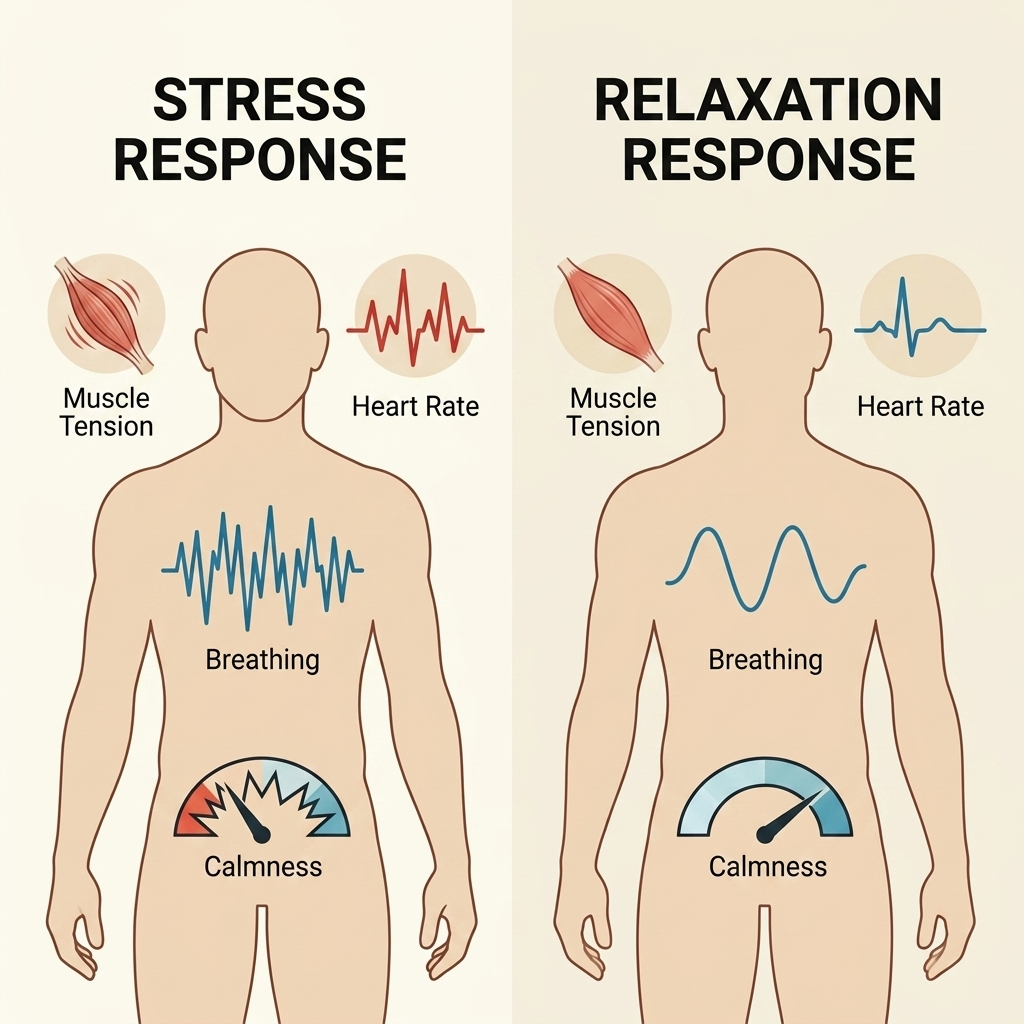
Stress is a normal physical and emotional response to challenges.
When your brain perceives a threat or demanding situation, your body can activate the familiar “fight-or-flight” response. Heart rate and breathing can increase, muscles may tense, and stress hormones are released.
The problem is not necessarily experiencing stress.
The challenge is when your body rarely gets the opportunity to come back down.
Long-term stress may contribute to or worsen problems such as sleep disturbances, headaches and digestive symptoms.
That is why stress management is not simply about “thinking positive.”
It is about creating small moments throughout the day that tell your body:
You are allowed to slow down now.
The Goal Isn’t to Eliminate Every Stressful Moment
Trying to eliminate stress completely can actually create more pressure.
Instead, a more realistic goal is to build a better recovery routine.
Think of your nervous system like a phone battery.
You cannot prevent the battery from being used.
But you can recharge it regularly.
The same principle applies to your daily wellness routine.
Instead of waiting until you feel completely overwhelmed, create small opportunities for relaxation before stress builds further.
1. Start With Two Minutes of Slow Breathing
One of the simplest techniques requires absolutely no equipment.
Your breathing.
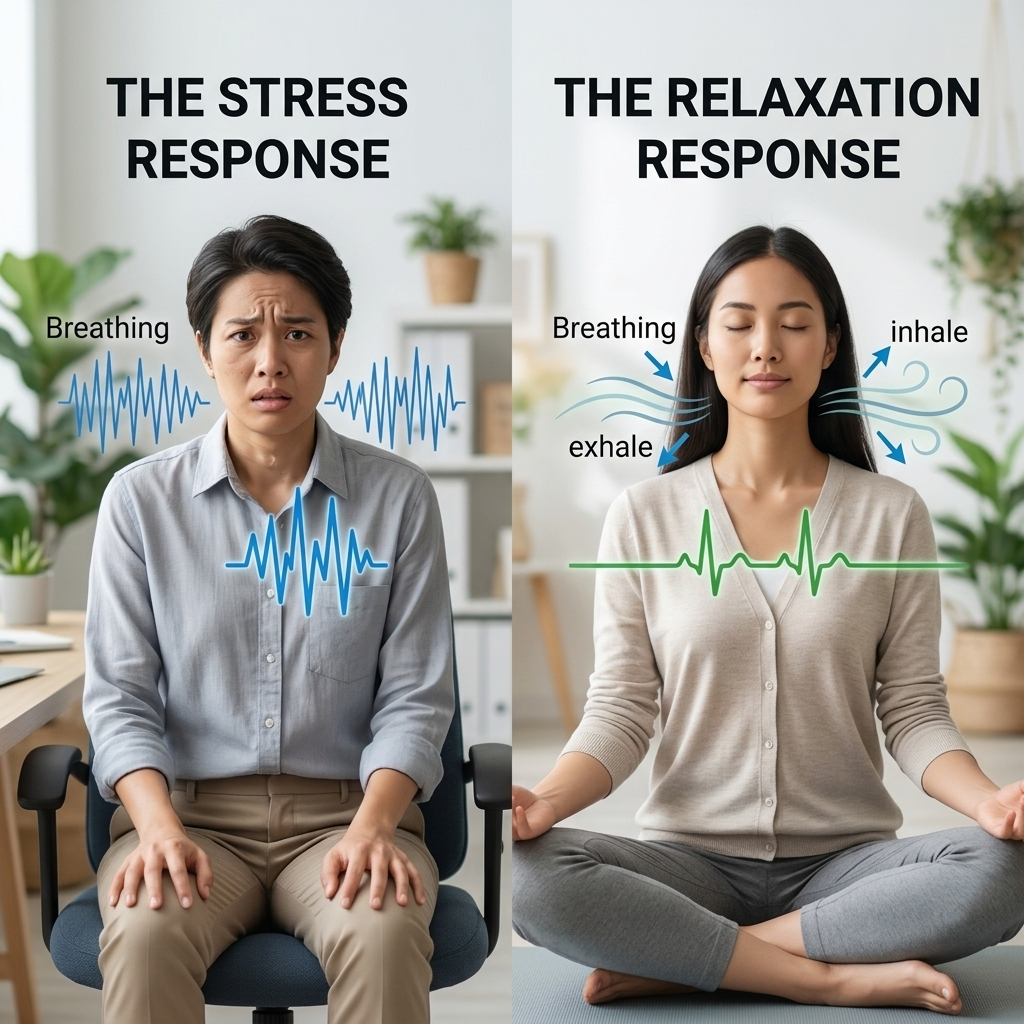
When people feel stressed, breathing can become faster and shallower. Deliberately slowing the breath can help shift attention away from racing thoughts and toward the body.
The NCCIH notes that slow, deep breathing — sometimes called diaphragmatic breathing — has preliminary evidence for helping reduce stress and may modestly affect cortisol and blood pressure.
Try this simple routine:
Sit comfortably.
Relax your shoulders.
Breathe slowly through your nose.
Let your abdomen gently expand.
Exhale slowly.
Repeat for two minutes.
You do not need to make the exercise complicated.
The goal is simply to create a deliberate pause.
Two quiet minutes can be easier to maintain than a 30-minute routine you never actually do.
2. Create a “Transition Ritual” Between Work and Home
One overlooked source of stress is the absence of a transition between different parts of your day.
You finish work.
But mentally, you are still at work.
You sit down for dinner.
Your mind is still answering emails.
You get into bed.
Your brain is still solving tomorrow’s problems.
Creating a small transition ritual can help separate one part of your day from another.
For example:
Work → Walk → Shower → Comfortable Clothes → Dinner → Relaxation
The ritual does not need to be elaborate.
Even a 10-minute walk, a shower, stretching or sitting quietly with music can create a psychological boundary.
The objective is not perfection.
It is transition.
3. Use Mindfulness to Stop Living Three Hours Ahead
Stress often pulls your attention into the future.
What if this happens?
What do I need to finish?
What if I forget something?
What will tomorrow look like?
Mindfulness offers a different approach: bringing attention back to what is happening right now.
Research summarized by the NCCIH suggests mindfulness practices may help with symptoms of stress and may also support sleep quality in some situations.
You can practice it without sitting cross-legged for an hour.
Try this:
The 5-4-3-2-1 Reset
Notice:
5 things you can see
4 things you can touch
3 things you can hear
2 things you can smell
1 thing you can taste
The purpose is simple:
Move your attention from mental noise back to the present moment.
4. Move Your Body — Even If You Don’t Have Time for a Workout
Stress can make you want to sit still.
But movement can become one of the simplest ways to interrupt that cycle.
You do not necessarily need a gym membership or a one-hour workout.
Try:
Taking a 10-minute walk
Stretching between tasks
Walking while making a phone call
Taking the stairs
Doing gentle mobility exercises
Going outside for fresh air
The NCCIH notes that research has examined exercise and mind-body practices for stress and anxiety, although the evidence varies by approach and condition.
The key is consistency.
A short walk you take every day is more useful to your routine than an ambitious workout you abandon after one week.
5. Protect the Last Hour Before Bed
Stress and sleep can create a frustrating cycle.
You feel stressed.
You sleep poorly.
You wake up tired.
Everything feels harder.
Then stress builds again.
Creating a calmer evening routine can help establish a clearer boundary between daytime activity and bedtime.
Try creating a “low-stimulation hour.”
During that hour:
Dim bright lights.
Put unnecessary notifications on silent.
Avoid stressful conversations when possible.
Choose relaxing music.
Read something calming.
Practice slow breathing.
Keep your bedtime relatively consistent.
Relaxation techniques can be incorporated into sleep routines, although they should not be viewed as a replacement for appropriate medical care or evidence-based treatment for chronic insomnia.
6. Give Your Body Another Way to Unwind
Sometimes the hardest part of stress management is not knowing what to do when you finally have a quiet moment.
You may sit down and immediately reach for your phone.
Or pour a drink.
Or continue scrolling.
Or simply keep worrying.
This is where developing a personal relaxation ritual can become useful.
It might include:
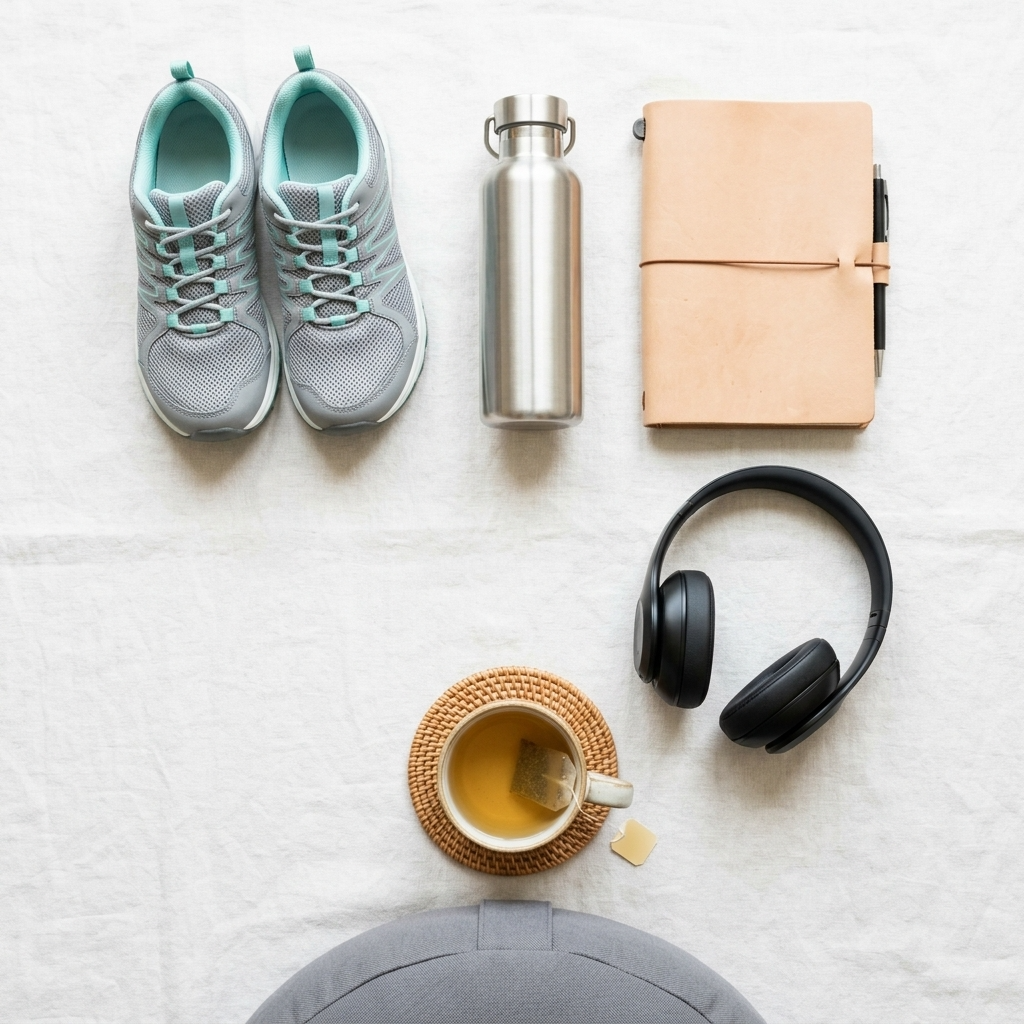
Warm shower + calming music + breathing + herbal tea + reading
Or:
Short walk + stretching + quiet room + mindfulness
The important part is creating a repeatable signal that your day is changing gears.
7. Consider Complementary Wellness Options When Your Routine Needs More Support
Lifestyle habits should remain the foundation.
But some people also explore complementary wellness products as part of their broader relaxation routine.
This is where ingredients such as CBD enter the conversation.
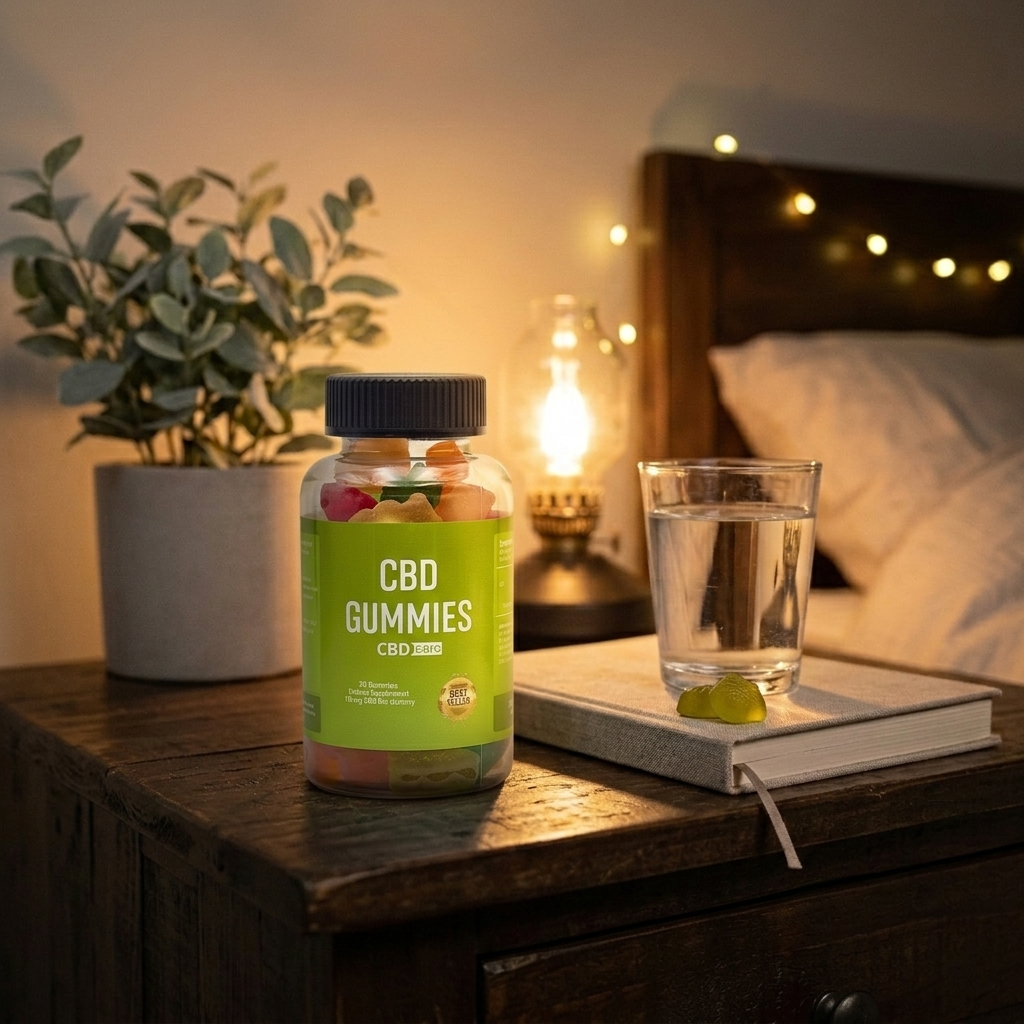
The product information provided for CBDCARE Gummies describes them as a CBD-containing gummy positioned around everyday stress relief, relaxation, mood support, sleep and physical comfort.
The manufacturer also describes the product as interacting with the body’s endocannabinoid system (ECS) and presents this as part of its explanation for the product’s intended effects.
That information should be understood as the manufacturer’s product description, rather than as proof that the gummies will produce the same result for every person.
Still, for someone already building a healthier stress-management routine, a convenient wellness product may be something worth researching.
What Should You Look For?
When considering a supplement or wellness product, look beyond the front of the bottle.
Consider:
What ingredients are included?
Is the amount of each active ingredient clearly disclosed?
Who manufactures the product?
Are manufacturing standards explained?
Are usage instructions available?
Are there appropriate safety warnings?
Does the product fit your personal health situation?
CBDCARE’s supplied product information states that the product is manufactured in the United States at a certified facility and that the company follows Good Manufacturing Practices. It also includes a satisfaction guarantee.
A Simple 10-Minute Stress-Reset Routine
You do not need to completely redesign your life.
Try this instead.
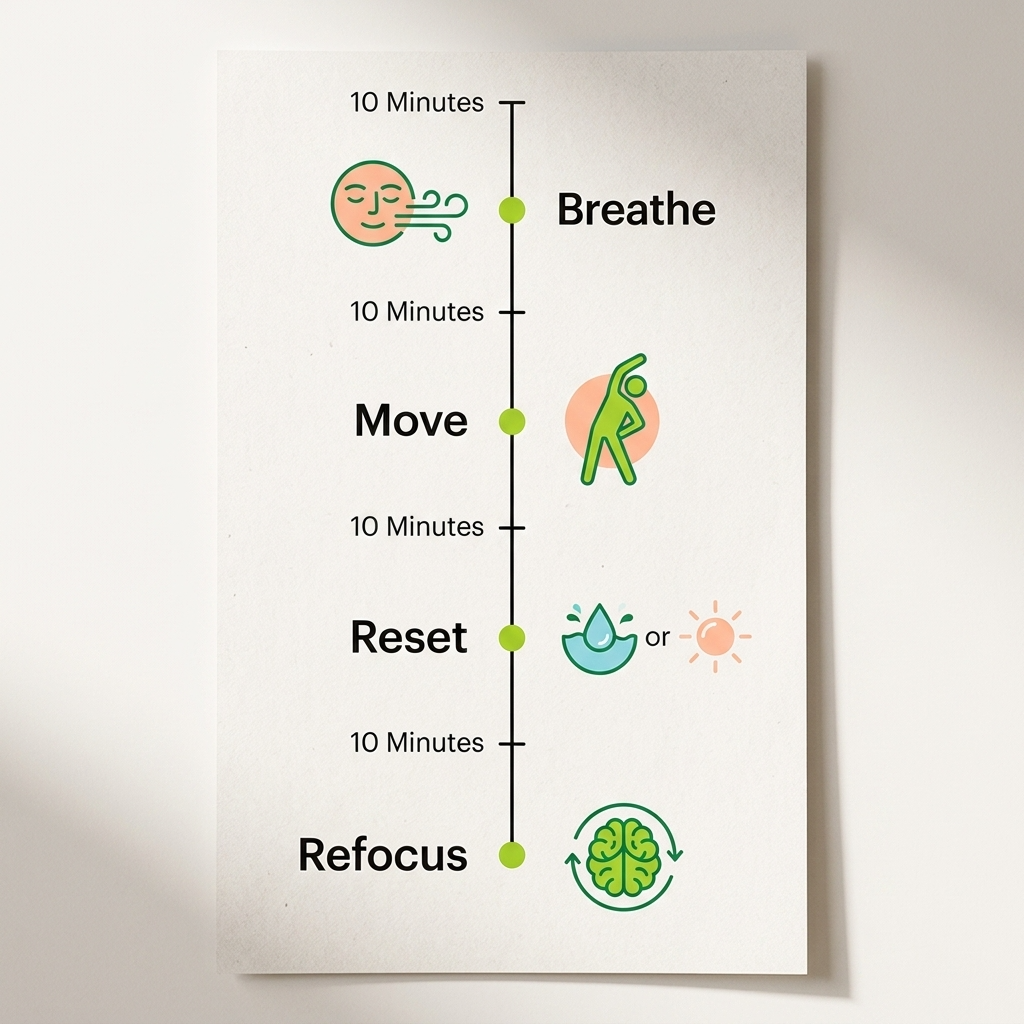
Minute 1–2: Breathe
Take slow, comfortable breaths and relax your shoulders.
Minute 3–5: Move
Walk around your home, office or outside.
Minute 6–7: Reset Your Attention
Notice your surroundings instead of focusing on unfinished tasks.
Minute 8–9: Stretch
Release tension from your neck, shoulders and legs.
Minute 10: Choose Your Next Action
Ask yourself:
“What is the one thing I actually need to do next?”
Then do only that.
This simple structure can help prevent your entire day from becoming one continuous reaction to the next problem.
Can a Natural Stress Routine Also Support Better Sleep?
For many people, stress management and sleep naturally overlap.
A calmer evening can make it easier to transition toward bedtime.
But it is important not to promise that any single technique or supplement will “cure” sleep problems.
The science around relaxation techniques and sleep is mixed, and chronic insomnia has specific evidence-based treatments, particularly cognitive behavioral therapy for insomnia (CBT-I).
Think of relaxation as one component of a larger sleep-supporting lifestyle.
Your routine matters.
Your environment matters.
Your sleep schedule matters.
And if persistent sleep problems continue, professional guidance matters too.
What About Replacing Alcohol as a Way to Unwind?
For some people, alcohol becomes associated with relaxation.
A stressful day ends.
A drink follows.
Over time, the brain can begin connecting the two.
If that sounds familiar, creating a different evening ritual may help break the association.
Instead of:
Stress → Alcohol → Temporary Relaxation
you can experiment with:
Stress → Walk → Shower → Relaxation Routine → Bedtime
The product material for CBDCARE specifically positions the gummies as an alcohol replacement and as a support for people trying to quit smoking.
However, these are manufacturer claims, and CBD should not be presented as a proven treatment for alcohol or nicotine dependence.
If you are trying to stop drinking or smoking, professional support can make the process safer and more effective.
The Bigger Picture: Stress Management Is a Daily Practice
The biggest mistake people make is waiting until they feel overwhelmed before trying to relax.
Instead, think smaller.
Two minutes of breathing.
Ten minutes of walking.
A calmer evening.
Less screen stimulation.
A consistent bedtime.
A few minutes of mindfulness.
A healthier way to transition out of work mode.
These actions may look insignificant individually.
Together, they can become a personal stress-management system.
And that is the real goal.
Not eliminating every stressful moment.
But becoming better at recovering from them.
A Simple Daily Stress-Relief Checklist
Save this list and try it for the next seven days:
Morning: 2 minutes of slow breathing
Daytime: Take at least one short movement break
Meals: Eat without rushing whenever possible
Afternoon: Step away from screens for a few minutes
Evening: Create a transition ritual
Before bed: Reduce stimulation and practice relaxation
Weekly: Review which habits actually make you feel calmer
You do not have to do everything perfectly.
Consistency beats intensity.
Final Thoughts: Give Your Mind a Reason to Slow Down
Modern life constantly asks for your attention.
Notifications.
Deadlines.
News.
Work.
Family responsibilities.
Financial concerns.
And sometimes the most important thing you can do is create a small space where none of those things gets to control the next few minutes.
Start with breathing.
Add movement.
Protect your sleep.
Practice mindfulness.
Build an evening ritual.
And if you are interested in adding a complementary wellness product to that routine, take the time to research the ingredients, manufacturer and intended use before making a decision.
For readers who want to explore the CBD option discussed above, CBDCARE Gummies are presented by the manufacturer as a convenient CBD-based wellness product focused on relaxation, stress relief, mood and sleep support.
Ready to Explore a Simple Relaxation Option?
If CBD is something you have been considering as part of your personal wellness routine, you can learn more about CBDCARE Gummies, review the manufacturer’s product information, ingredients and terms, and decide whether it is appropriate for you.
→ Explore CBDCARE Gummies and Learn More
Always review product information carefully. The supplied product material states that CBDCARE’s efficacy and safety claims have not been evaluated by the U.S. Food and Drug Administration and that the product is not intended to diagnose, treat, cure or prevent disease. Consult a qualified healthcare professional before using CBD or other supplements, particularly if you take medications or have an existing health condition.

🌿 Want to Explore a Simple Way to Add More Calm to Your Routine?
If you’re looking for a convenient CBD-based option to complement your everyday relaxation routine, take a closer look at CBDCARE Gummies.
Discover what’s inside the formula, how the product is designed to fit into a daily wellness routine, and what else is included with your order.

👉 [READ THE FULL PRODUCT DETAILS & EXPLORE CBD Care Gummies] 🔗
See the formula, benefits, product details and available bonuses on the official product page.
👉 [EXPLORE THE COMPLETE CBD Care Gummies OFFER]🔗
Related Reading
Already working on your overall wellness routine?
Continue with our first article:
How to Improve Your Gut Health Naturally: 10 Everyday Habits That Matter
A healthy lifestyle is rarely about one isolated habit. Stress management, nutrition, digestion, sleep and movement can all become part of a broader approach to everyday wellness.
Suggested internal link: https://thehealthformula.blog/how-to-improve-your-gut-health-naturally-10-everyday-habits-that-matter/